Research

Globalization Origins of Autocratic Rise

Engaged Reformers, Autocratic Advantages, and the Post-Cold War Reversal

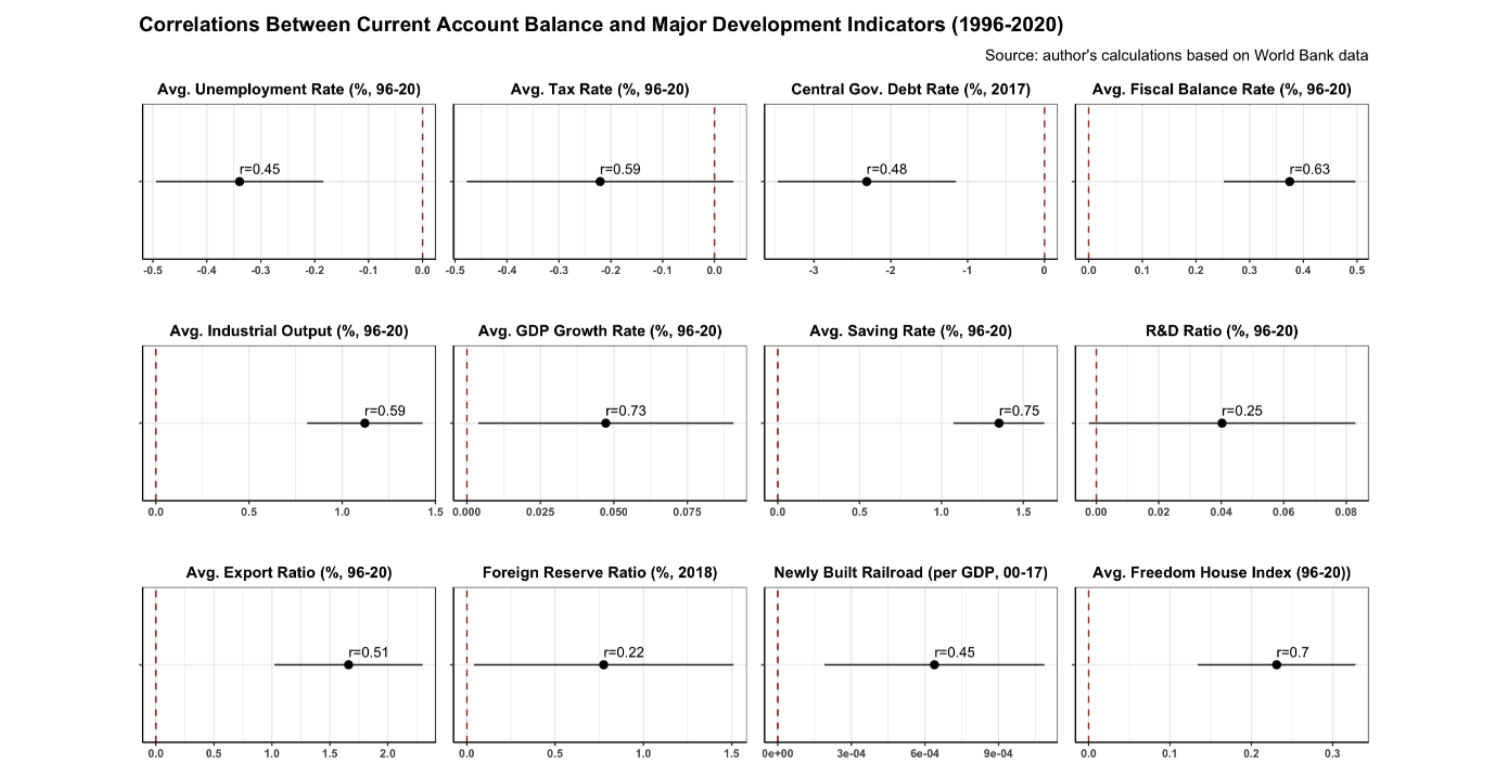
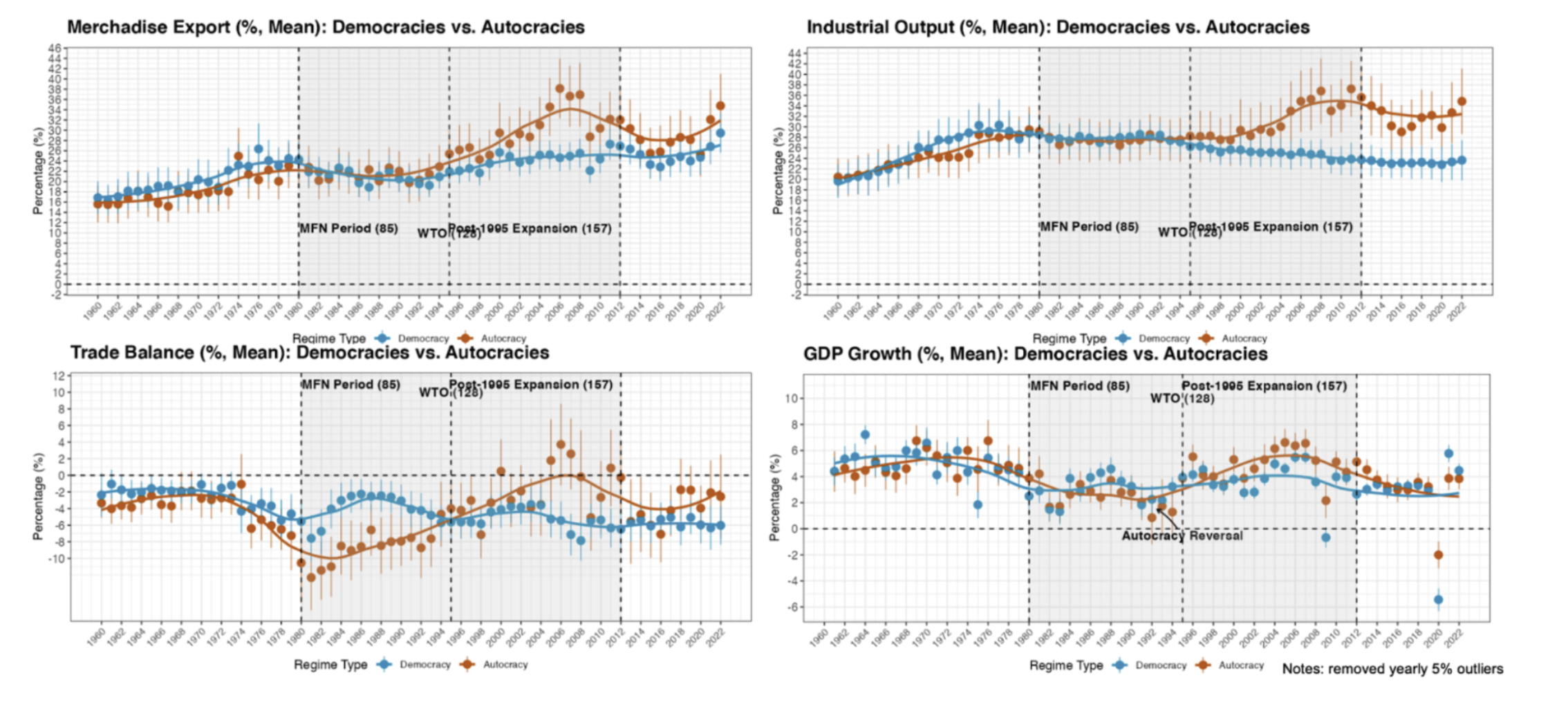
How have autocracies managed to re-emerge after 1990? The key boils down to the global trade system and a new form of autocracy: "Engaged Reformer."

Paper
Abstract

Conventional wisdom holds that globalization promotes political liberalization and that inclusive institutions favor growth. Yet after 1990, many autocracies not only consolidated but also outperformed comparable democracies economically, especially in trade. This article argues that globalization shifted the payoff structure of development in a way that advantages a specific authoritarian regime—economically engaged and reformed autocracies—in external demand competition, despite their weak internal demand. Autocratic institutional features, conventionally viewed as liabilities in closed economies—centralized authority or weak accountability—can become advantages under engagement-and-reform configurations. Specifically, trade integration and domestic reform jointly supply credibility for global market participation; on that basis, autocratic features become less costly levers for amplifying export competitiveness. This demand-competing advantage substitutes for politically inclusive institutions. Empirically, I connect macro-level patterns to micro-level mechanisms, showing how autocratic engaged reformers—accounting for over 90 percent of autocracies’ output and extending beyond China and oil states—outperformed in exports among broader economic outcomes. The findings reveal how globalization, interacting with domestic institutions, alters the institutional logic of competitive advantage, while exposing the limits of authoritarianism alone.
After Equilibrium

Expectation Mismatch, Real Deindustrialization, and the Roots of Anti-globalization Politics

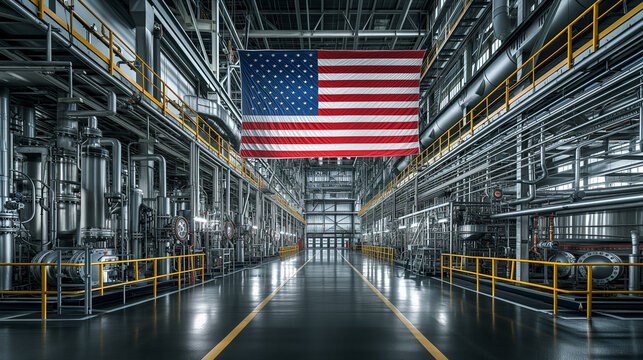
Classic trade theories have largely glossed over what can happen when supposedly advantagous sectors turn out to face displacement. Trade then is a nonstarter. The "After Equilibrium" theory largely explains today's trade conflicts. How does it play out?

Paper
Abstract

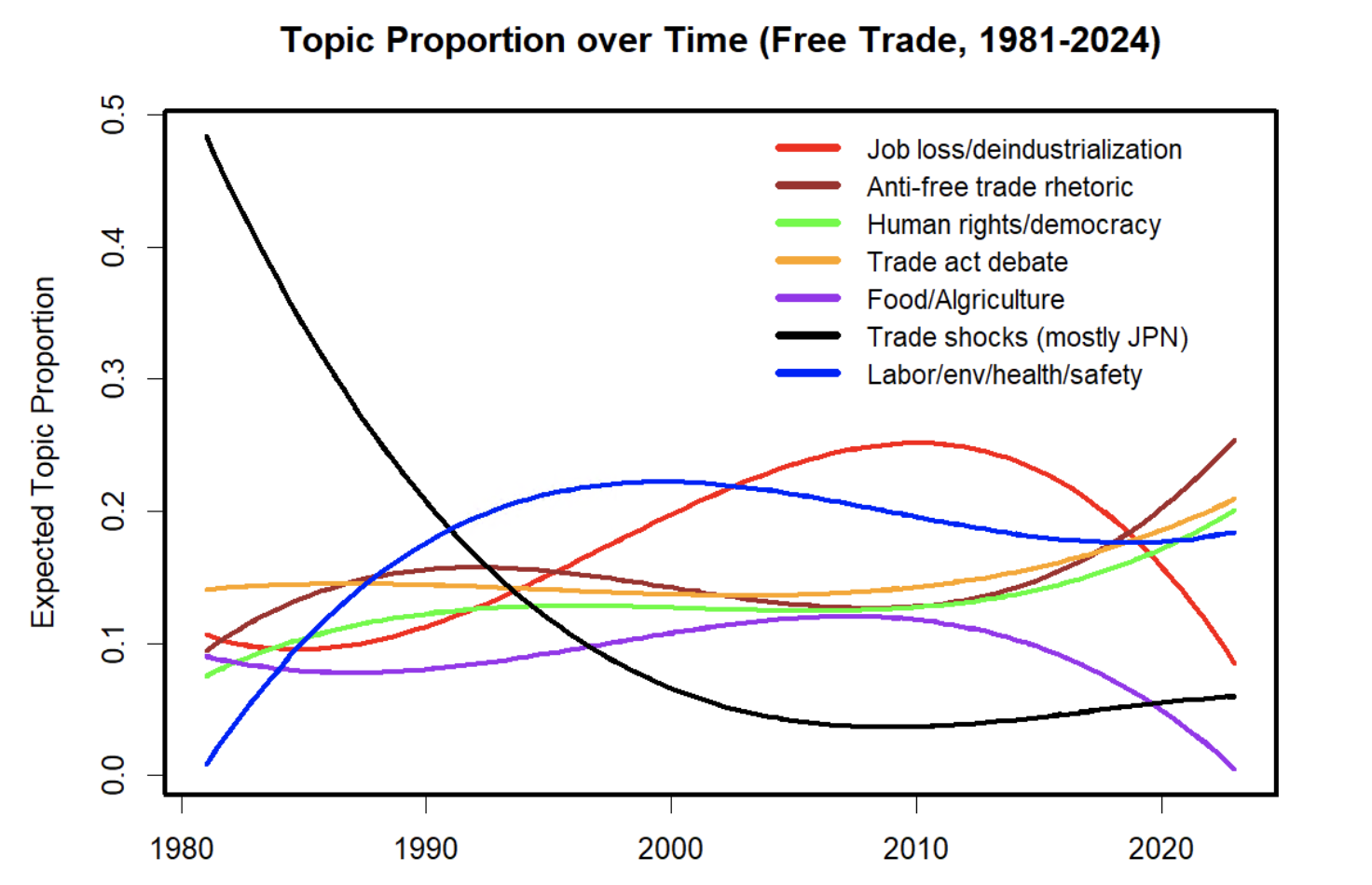
Why has free trade become harder to sustain in its maturity than in its rise? Prevailing accounts locate trade backlash primarily among liberalization’s losers. Yet backlash intensified long after those losses were absorbed, increasingly driven by policymakers across parties rather than by constituent pressure. I argue that the cause is top-down, and that support for openness rests on a promise that trade would reward one’s comparative strengths. Comparative advantage, however, is a claim about where liberalization settles, not whether that settlement endures. As globalization matures, foreign upgrading, technology diffusion, and state-backed distortions all erode incumbent advantage sectors, producing an expectation mismatch: trade no longer reads as a bargain that legitimated openness and adjustment costs, and elites begin to reinterpret it as unfair, producing real deindustrialization, and politically unsustainable. I test this theory in the context of U.S. trade politics through rich evidence from congressional speeches (1981-2024), the 2018 Section 301 action as the unprecedented trade policy reversal since WWII, and the U.S.-Japan and U.S.-China trade conflict cases. The findings show that protection concentrating in incumbent advantage sectors facing imminent competitive threat, broadening as the threat turns systemic. Contemporary anti-globalization is not the politics of displaced losers, but of threatened winners eroding the political sustainability of the openness bargain.

.

Globalization Backlash and Order Contestation

An Issue-based Theory of Conditional Resilience

The post-war Liberal International Order (LIO) along with globalization faces significant challenges from potential issues. How do these issues manifest?

Paper
Abstract

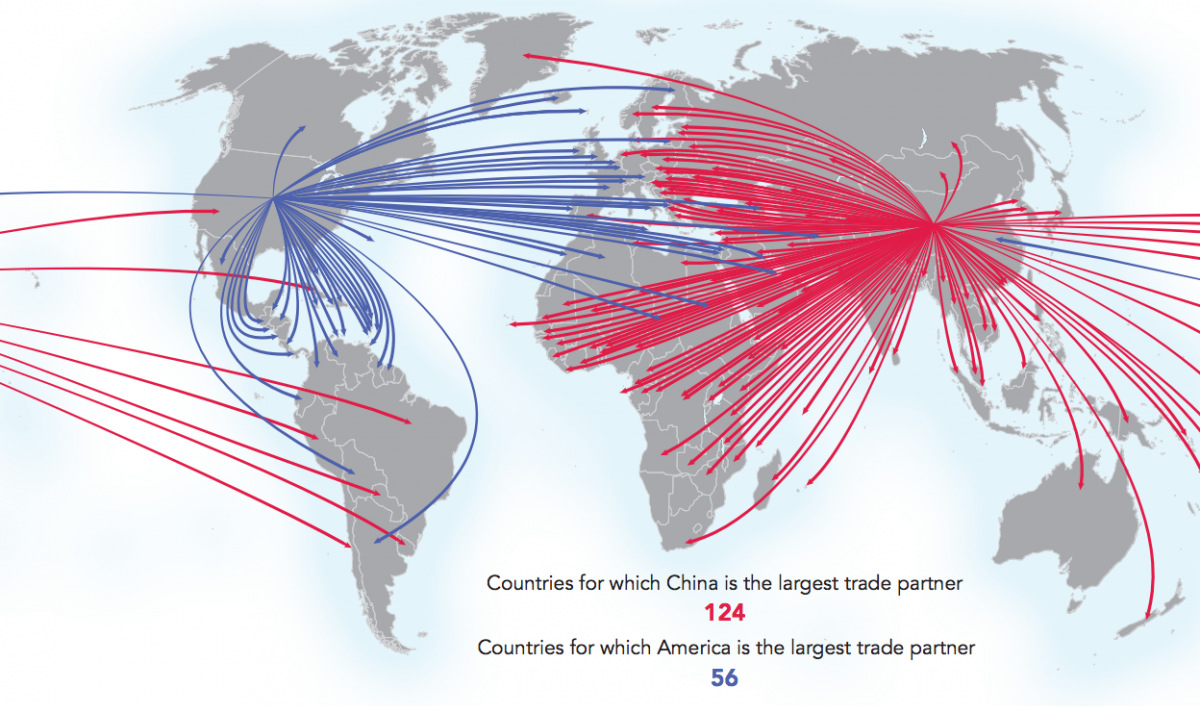
When do aggrieved states seek change within an international order, and when do they instead contest it deeply, such as by backing a challenger? I argue that the answer depends on the character of the issue in dispute and the credibility of the outside option. When disengagement from a densely institutionalized order is costly, it takes more than ordinary grievances; it requires a breakdown of leaders’ loyalty to the order. Discontent therefore tends to escalate only through what I term helpless issues: those that are severe, persistent, attributable to the order, and resistant to reform from within. However, support for a challenger is dampened when the challenger is itself implicated in the underlying issue. Employing a mixed-methods approach, I test the theory in the case of the Liberal International Order (LIO) and U.S.–China competition, focusing on an highly contested issue of global imbalances. I show that support for Chinese leadership remains flat until grievances cross a sharp threshold and concentrates among helpless issues. Moreover, persistent current-account imbalances increase support, while China’s implication, proxied by bilateral trade imbalances, dampens the effect. Cross-domain evidence, alongside leaders’ rhetoric and qualitative cases, provides consistent support. The findings suggest conditional resilience of an order and show how issues—the source of contestation—shape globalization backlash, order durability, and renewed great-power politics.

Observational Equivalence of LLM and Human Annotation

(with Kentaro Nakamura and Jing Ling Tan)

We show that LLM and human coding are observationally equivalent in annotation quality: this equivalence results from both agreement and disagrement. When LLMs disagree with experts, experts are also more likely to disagree with one another, and clarifying coding rules reduces disagreement among both experts and sufficiently capable LLMs. Thus, there is little empirical basis for preferring human coding on annotation quality alone

Paper
Abstract